
Just Breathe: 60-Second Calm Routine for Anxiety
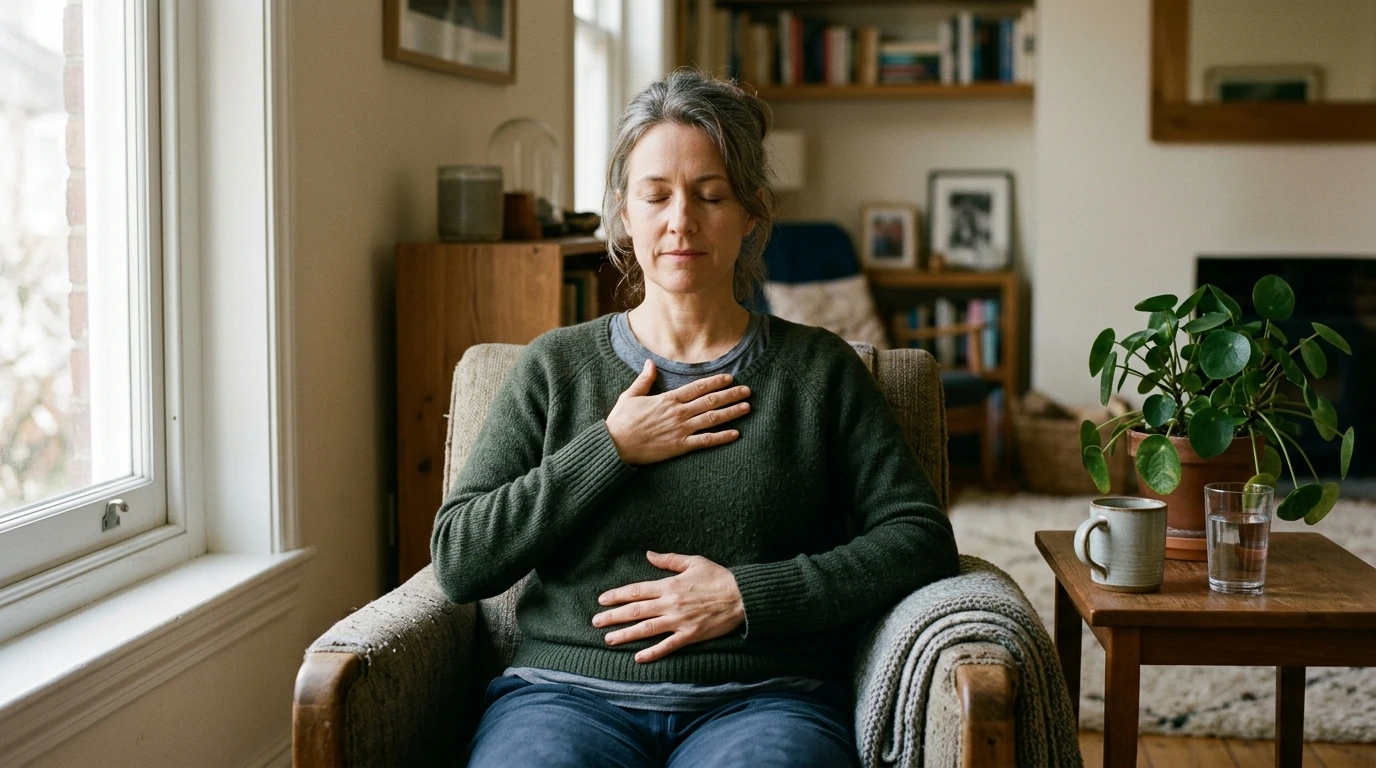
Just Breathe: A Gentle, Practical Breathing Routine for Anxious Moments
Anxiety can show up fast—tight chest, racing thoughts, restless hands, and that urgent feeling that you need to do something right now. Breathing is one tool you always have with you, in any setting, and it can help your body shift from alarm mode toward steadier ground. Our team created “Just Breathe” as a simple digital guide for real life: quick techniques, clear steps, and a calm structure that’s easier to follow when the moment feels like too much.
Why breathing helps when anxiety spikes
When anxiety rises, your breathing often gets shallow or quick without you noticing. That change can intensify physical sensations like lightheadedness, chest tightness, tingling, or a “can’t get a full breath” feeling. Slowing the breath—especially the exhale—supports the body’s relaxation response by encouraging a steadier rhythm and reducing the internal sense of emergency.
Breath practice isn’t about forcing anxiety to disappear on command. It’s about creating enough space to make the next helpful choice: drink water, step outside, text a friend, return to the task, or rest. And the “best” technique is the one you can actually do in the moment—so keeping a small set of options makes it easier to start.
For an evidence-based overview of relaxation methods, you can also visit NCCIH’s guide to relaxation techniques and the NHS breathing exercises for stress.
Start here: a 60-second reset that works almost anywhere
If you only remember one thing, make it this: exhale first, then keep your exhale a little longer than your inhale. That tiny shift can interrupt breath-holding and help your body feel safer.
- Posture: Sit back or stand tall and let your shoulders drop. If you can, place one hand on your belly and one on your chest to notice where the breath is moving.
- Exhale first: Breathe out gently as if fogging a mirror—soft, not forced.
- Inhale through the nose: Use a comfortable count (about 3–4).
- Longer exhale: Breathe out for about 5–6, keeping it smooth and easy.
- Repeat 6–8 rounds: Then check in for one small change (jaw unclenching, shoulders lowering, mind slightly less loud).
- Adjust for comfort: If longer exhales feel uncomfortable, shorten the counts. Consistency matters more than precision.
| Step | What to do | Time |
|---|---|---|
| 1 | Relax shoulders and unclench jaw | 10 sec |
| 2 | Gentle exhale first | 10 sec |
| 3 | Inhale 3–4, exhale 5–6 | 30 sec |
| 4 | Notice one change (even small) | 10 sec |
Breathing techniques to match different kinds of anxiety
Different anxious moments call for different tools. When you can match the technique to the sensation, it’s easier to stay with it long enough for your nervous system to settle.
| Technique | How it feels | Try it when | Simple cue |
|---|---|---|---|
| Longer Exhale Breathing | Grounding, settling | Panic-y sensations, tight chest | “Exhale a little longer.” |
| Box Breathing (4-4-4-4) | Structured, steady | Racing thoughts, overwhelm at work | “Follow the corners.” |
| 4-7-8 (gentle version) | Sleepy, calming | Bedtime spirals | “Slow down the night.” |
| Paced Breathing (about 5–6 breaths/min) | Even, regulated | Stress build-up, pre-meeting nerves | “Slow and smooth.” |
- If thoughts are racing: Use a counted pattern (like box breathing) so your mind has one simple job.
- If your chest feels tight: Keep inhales smaller and easy, and let the exhale be longer—avoid over-breathing.
- If stress is building all afternoon: Do 3–5 minutes of paced breathing before it escalates.
- If worry shows up at bedtime: Choose a gentle rhythm and pair it with a “sleep cue” (dim light, a warm drink, quiet music).
- If you’re in a social situation: Soft nasal breathing with a longer exhale is discreet and effective.
A simple daily rhythm: practice when you’re already okay
The fastest way to make breathing tools usable during anxiety is to practice briefly when you’re calm. Two or three minutes once or twice a day builds familiarity, so your body recognizes the pattern when you need it.
To learn more about how stress affects the body overall, the American Psychological Association’s overview is a helpful, grounded resource.
What’s inside “Just Breathe” and how you can use it
Our team designed Just Breathe: A Simple Guide to Easing Anxiety with Breathing Techniques (Digital Download PDF) to turn “take a deep breath” into a concrete plan you can follow even when focus is limited. You’ll get step-by-step options, quick technique pickers, and simple “what to notice” cues so you can tell what’s working without overthinking it.
Small practical supports that can pair well with calming routines
- Diamond Rhinestone Steering Wheel Cover can be a tactile cue for calmer breathing while you’re parked before heading in, or anytime you’re practicing a “longer exhale” reset in the car.
- Christmas Ceramic Dinner Plate can support a mindful meal routine—slowing down for a few steady breaths before the first bite is a simple way to transition out of a stressed state.
Kind, important notes for safe practice
FAQ
How fast can breathing techniques help with anxiety?
Some people feel a shift in 1–3 minutes, while others notice changes more reliably after consistent daily practice. Start with 60 seconds of longer exhales, and if it helps, extend to 3–5 minutes.
Which breathing technique is best for panic symptoms?
Gentle, slower breathing with longer exhales is often the most comfortable place to start, especially if you’re feeling tight-chested or lightheaded. Keep the inhale easy, avoid over-breathing, and skip breath holds if they feel activating.
Can this guide be used on a phone or printed?
Yes—“Just Breathe” is a digital PDF you can save to your phone for quick access. You can also print a few pages and keep them somewhere easy to reach, like a desk drawer or nightstand.













Leave a comment