
Portable Tire Inflator for Toyota, Ford & BMW: Easy PSI
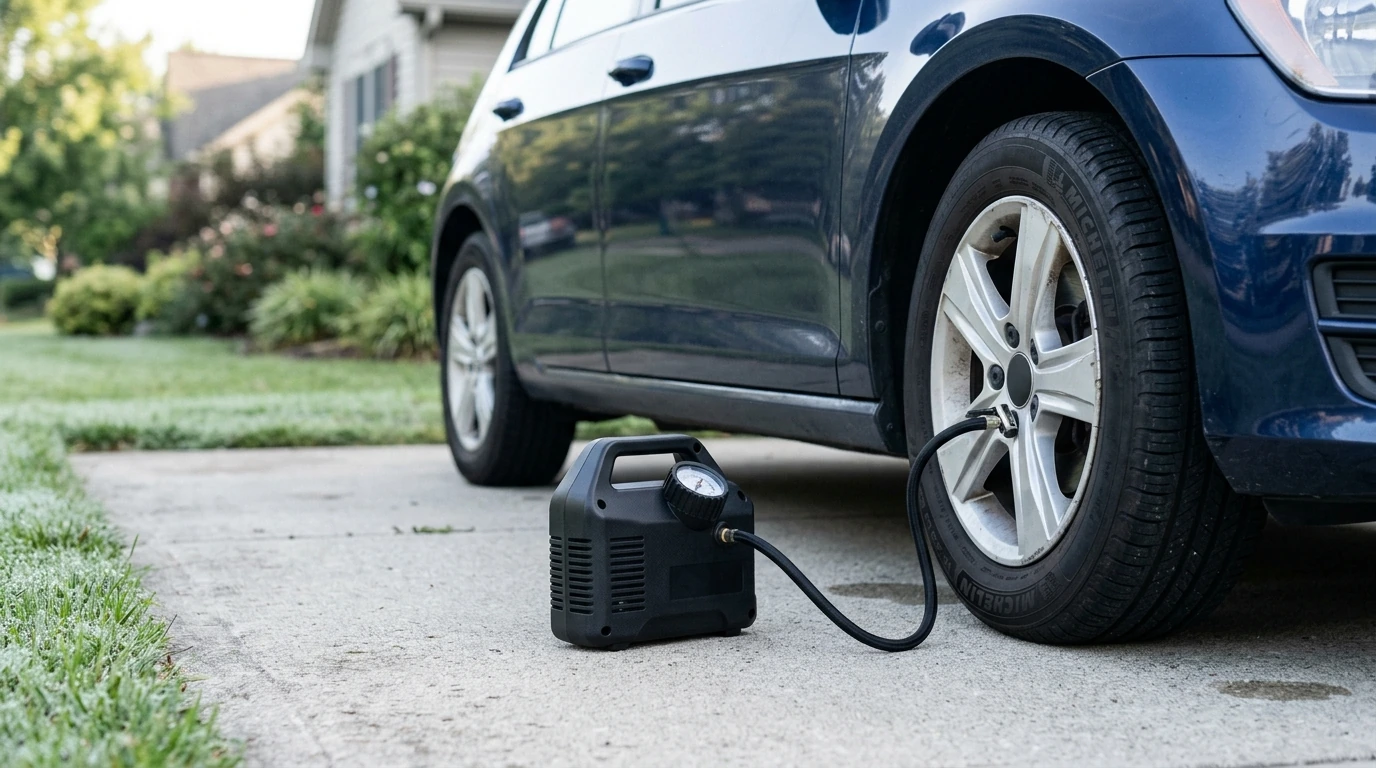
Portable Car Air Pump for Toyota, Ford, BMW: Quick Tire Top-Ups Without the Guesswork
Tire pressure drifts with weather changes, short trips, and everyday driving—often without obvious warning until handling feels off or a light comes on. Keeping a compact inflator in the trunk helps you handle slow leaks and seasonal pressure drops on the spot, whether your vehicle is a Toyota commuter, a Ford family SUV, or a BMW daily driver. Our team keeps a portable pump in reach because it turns a “now what?” moment into a quick, controlled top-up—no hunting for a working gas-station compressor.
For tire-safety fundamentals and why pressure matters, you can also review guidance from NHTSA Tire Safety and how correct inflation supports efficiency at FuelEconomy.gov.
Why a portable air pump belongs in every glove box or trunk
- Handles routine top-ups after temperature swings that can lower tire pressure overnight.
- Helps you respond to slow leaks long enough to reach a safe repair location.
- Supports safer braking and steering feel by keeping tires closer to the vehicle’s recommended pressure.
- Reduces the need to track down a functioning station compressor when time is tight.
- Useful beyond tires for common inflatables that use compatible valve types (when applicable).
What to check before inflating: pressure basics for Toyota, Ford, and BMW
Before you add air, the goal is simple: match your vehicle’s recommended cold tire pressure. That recommendation is tuned to your car’s weight, handling balance, and load assumptions—not the maximum pressure printed on the tire sidewall.
- Use the vehicle’s recommended tire pressure from the driver-door jamb label (not the tire sidewall maximum).
- Measure and inflate when tires are cold whenever possible for a more accurate reading.
- Confirm whether front and rear tires require different pressures (common on many vehicles).
- If a temporary spare is installed, follow the spare’s specified pressure, which often differs from the main set.
- After topping up, re-check each tire to confirm consistency side-to-side.
Fast pre-inflation checklist
| Step | What to do | Why it matters |
|---|---|---|
| 1 | Find the door-jamb pressure spec | Targets the correct PSI for the vehicle’s load and suspension tuning |
| 2 | Check tires when cold | Avoids inflated readings from heat buildup during driving |
| 3 | Inspect for obvious damage | Inflation won’t fix cuts, bulges, or punctures that are actively leaking fast |
| 4 | Inflate in short bursts and re-check | Prevents overshooting the target pressure |
| 5 | Replace valve caps securely | Helps keep dirt and moisture out of the valve core |
A simple routine: top up a tire in minutes
- Park safely away from traffic, engage the parking brake, and turn on hazard lights if you’re roadside.
- Remove the valve cap and keep it somewhere clean so it doesn’t pick up grit.
- Attach the hose/connector firmly to prevent air leaks at the valve.
- Inflate toward the door-jamb target pressure, pausing to verify the reading as needed.
- After disconnecting, listen briefly for air seepage and re-seat the connector if necessary.
- Repeat for all tires—pressure often drops across the full set during colder months.
If your car uses a TPMS warning light, remember that a light can mean “low pressure” rather than “flat.” A quick top-up, then a careful re-check of all four tires, often solves it—especially after a big temperature swing.
Choosing the right portable inflator for mixed garages (Toyota + Ford + BMW)
- Power and convenience: choose a format that matches how you’ll use it—quick top-ups versus frequent use.
- Accuracy: prioritize a clear pressure readout so you can stop at the right PSI instead of guessing.
- Reach: hose and power-cord length should comfortably reach all four tires, including larger crossovers.
- Heat management: don’t run continuously for long stretches; let the unit rest if it becomes hot.
- Storage: a compact shape and included accessories make it easier to keep in the vehicle full-time.
- Compatibility: the connector should fit standard Schrader valves used on most passenger vehicles.
Roadside scenarios where an inflator saves the day
Care, storage, and safety notes
A practical pick from our shop
If you want a simple, keep-it-in-the-trunk solution, our Portable Car Air Pump for Toyota, Ford, BMW is a compact option intended for routine tire top-ups across common passenger vehicles. It’s an easy add-on if you’re building a basic car kit with essentials like a tire gauge, a flashlight, and a few roadside must-haves.
And since comfort matters on everyday drives, you can also dress up your interior with our Diamond Rhinestone Steering Wheel Cover—a quick way to add grip and style while you’re upgrading your car essentials.
FAQ
Can a portable air pump fix a flat tire?
A portable inflator can restore pressure temporarily for low tires or slow leaks, but it does not repair punctures, sidewall damage, or major leaks. If air is escaping quickly or the tire looks damaged, use a spare or get professional help and keep driving to a minimum.
What PSI should Toyota, Ford, or BMW tires be inflated to?
Use the recommended cold tire pressure listed on your driver-door jamb label. Front and rear targets can differ, and the tire sidewall number is a maximum rating—not the correct everyday setting.
When should tire pressure be checked for the most accurate reading?
Check pressure when the tires are cold, ideally before you drive or after the car has been parked for a few hours. Driving heats the tires and raises pressure, so a consistent cold-check routine—monthly and before trips—keeps readings reliable.















Leave a comment