
Bite Resistant Dog Ball: Durable Fetch for Power Chewers
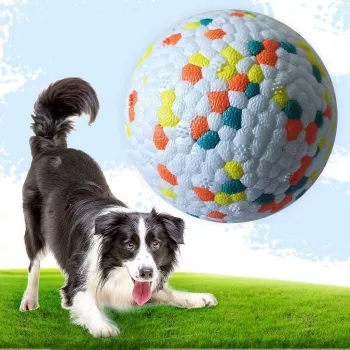
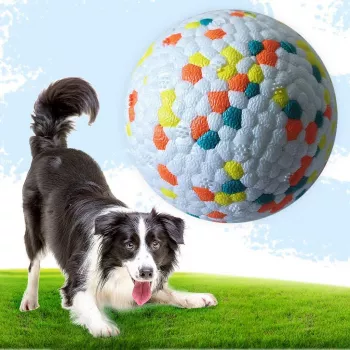
Bite Resistant Dog Ball: A Tougher Toy for Daily Fetch and Chew Time
Some dogs treat ordinary balls like a quick challenge: grab, chew, split, repeat. A bite resistant dog ball is made for the dogs that play harder—so fetch lasts longer, chewing stays more satisfying, and toy time feels less like a constant replacement cycle. Our team put together this guide to help you know what to look for, how to use a tough ball safely, and how to keep playtime engaging day after day. For more guidance, see Dog Bone Safety.
Why a bite resistant ball belongs in the toy bin
If your dog can crush a standard ball in a single afternoon, a tougher option can make daily play feel smoother and more predictable. For further reading, see A Guide to Safe Dog Chews and Non-Toxic Toys.
- Helps extend play sessions for dogs that flatten or shred softer balls quickly.
- Supports healthy activity: fetch, chase, carry, and supervised chewing breaks.
- Keeps routines simple: one durable go-to toy for the yard, park, or living room.
- A sturdier ball can reduce the temptation to chew household items when boredom hits.
What “bite resistant” means in real-life play
“Bite resistant” is about improved durability under repeated pressure—not a promise that the toy can’t be damaged. Dogs chew differently: some slice with back teeth, some clamp and grind, and some obsessively “work” one spot until it gives.
- Designed to stand up better to repeated chomping, grinding, and carry-and-chew habits.
- Still not indestructible: supervision matters, especially for aggressive chewers.
- The best results come from matching toughness to chewing style and size.
- Durability isn’t only material—it also includes shape, flex, and how the ball handles compression.
For broader toy-safety pointers (size, supervision, and when to toss a damaged toy), you can also review guidance from the AKC and choking-hazard reminders from the ASPCA.
How to choose the right ball for your dog
1) Start with safe sizing
- Choose a ball that can’t be swallowed and isn’t small enough to lodge in the throat.
- If you’re between sizes, go larger—especially for strong, enthusiastic retrievers.
2) Match the “feel” to chew intensity
- Moderate chewers often enjoy more bounce and flexibility.
- Power chewers typically do better with a firmer, thicker feel that resists deep tooth marks.
3) Pick for play style (fetch-first vs. chew-first)
- Fetch-focused dogs do best with a ball that rolls and bounces consistently so you can keep a steady rhythm.
- Chew-focused dogs need a ball that holds up under pressure during short, supervised chew breaks.
4) Multi-dog homes: plan for the biggest mouth
- Select a size that fits the largest dog’s safety needs to reduce accidental swapping.
- If one dog routinely breaks toys into pieces, rotate toys and limit chew sessions to supervised intervals.
Everyday ways to use a tough ball (so it doesn’t get boring)
A durable ball lasts longer when it’s used with a little structure. These simple patterns keep your dog engaged without encouraging nonstop gnawing between throws.
- Two-ball fetch: Alternate throws to keep attention high and reduce frantic chewing while you’re walking to pick up the ball.
- Short sprint sets: Do 5–10 throws, then a calm break; repeat to burn energy without tipping into overstimulation.
- Training rewards: Use the ball as a high-value reward for recall, drop-it, and place.
- Indoor roll games: Roll along the floor or down a hallway for a lower-impact option on busy days.
- Treasure hunt: Hide the ball behind furniture or in another room and cue “find it.”
Safety and care that keep playtime problem-free
Bite Resistant Dog Ball: quick overview
When you want a simple, everyday ball that’s built for tougher chewing and repeated play, our Bite Resistant Dog Ball is an easy staple to keep on hand. You’ll get the best results by choosing a safe size, using it for supervised chew breaks (not all-day chewing), and checking it routinely for wear.
| Item | Details |
|---|---|
| Product | Bite Resistant Dog Ball |
| Availability | In stock |
| Price | $3.51 USD |
| When to use | Fetch, chase, carry, supervised chew breaks |
| Good fit for | Dogs that wear out standard balls quickly |
Make it last longer: simple toy-rotation routine
More in-stock picks you can add to your order
- Christmas Ceramic Dinner Plate (a simple seasonal add-on for your home)
- Diamond Rhinestone Steering Wheel Cover (a quick way to refresh your daily drive setup)
FAQ
Is a bite resistant dog ball safe for aggressive chewers?
Bite resistant helps a ball hold up better, but no toy is truly indestructible. For aggressive chewers, you’ll get the safest experience by choosing a correct size, supervising use, and retiring the ball right away if cracks, missing pieces, or deep tears appear.
What size ball should be chosen to avoid choking hazards?
Choose a ball that’s large enough that it can’t be fully taken into your dog’s mouth or swallowed. If you’re not sure, size up and actively monitor play—especially if the ball becomes worn down or deformed over time.
How often should a dog ball be replaced?
Replace based on condition rather than a set schedule. Any cracks, missing chunks, sharp edges, or deep tears are a clear sign it’s time to retire the ball, and heavy chewers may reach that point sooner.













Leave a comment